Views in 48 hours
Watched within two days of publication, alongside a results statement the same shareholders could have read instead.

NSI added video to its FY 2025 results communications without a film crew, without weeks of preparation, and without asking its CEO and CFO to clear their calendars.
Watched within two days of publication, alongside a results statement the same shareholders could have read instead.
Total viewing time accumulated across the first reporting cycle — attention the PDF has no way of measuring.
One viewer in five stayed for the full twelve minutes, through the financial review and the outlook.
NSI publishes its annual results three and a half weeks after closing its books. A filmed executive update is booked weeks ahead, shot on a fixed day and edited afterwards. The two do not fit inside each other.
The IR team's starting point was not that the results statement was wrong. It was that a document on its own asks a great deal of a reader who has forty other sets of results to get through that week — and that the shareholders least likely to finish it are the ones who will never dial into the call.
The entire window from book close to publication is shorter than a conventional video production schedule. Whatever the format was going to be, it had to be built inside the reporting calendar rather than around it.
A shoot means booking the CEO and the CFO in the busiest fortnight of their year — and booking them a second time if anything needs redoing.
Under a traditional production process, a number that changes on the Wednesday night is a reshoot and a second round of post-production. That risk alone rules the format out.
NSI reports under Euronext Amsterdam obligations with a small organisation and no in-house production capacity. Results week is not the moment to run a procurement exercise.
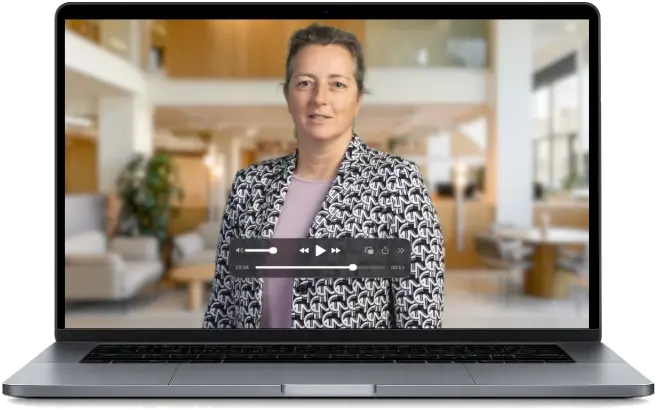
SurgeIR built presenters for NSI's CEO and CFO from a single photography and voice recording session, with written consent. From that point on, every reporting cycle can carry a professional, scripted video generated inside the platform — editable up to the moment of publication, and set up to sit within NSI's GDPR and MAR obligations.
NSI published the video as a supplementary resource alongside the FY 2025 results. It disclosed plainly that the presenters were AI-generated, and invited shareholders to say what they thought of it.
What the company gained was an additional channel for investor communication — without adding cost, complexity, or management time to results week.
We were very upfront about it being AI, but still, some people did not notice. And the feedback was really good. I expected nuance but it was overwhelmingly positive.
The video drew 2,619 views within 48 hours of publication and more than 17 hours of cumulative watch time across the first reporting cycle. One viewer in five watched all twelve minutes to the end.
The qualitative response mattered as much as the counts. Investors described it as an efficient way to take an initial read on the results: more engaging than the statement, and easy to forward internally. Institutional holders engaged with the format, not only retail. NSI has confirmed it will continue to use it in future reporting cycles.
If the production cycle is longer than the period between book close and publication, video is not an option at all. Removing the crew is what puts it back on the table for a company reporting in under a month.
The photography and voice session happened one time. Every cycle since has started from an approved script rather than a booking — which is where the hours rather than weeks comes from.
NSI labelled the video and asked for feedback rather than hoping nobody would raise it. Being upfront cost nothing: some viewers did not notice, and the response was positive regardless.
Retail and international shareholders received the same twelve minutes as the analysts on the call, from the same approved script — and the institutions watched as well.